
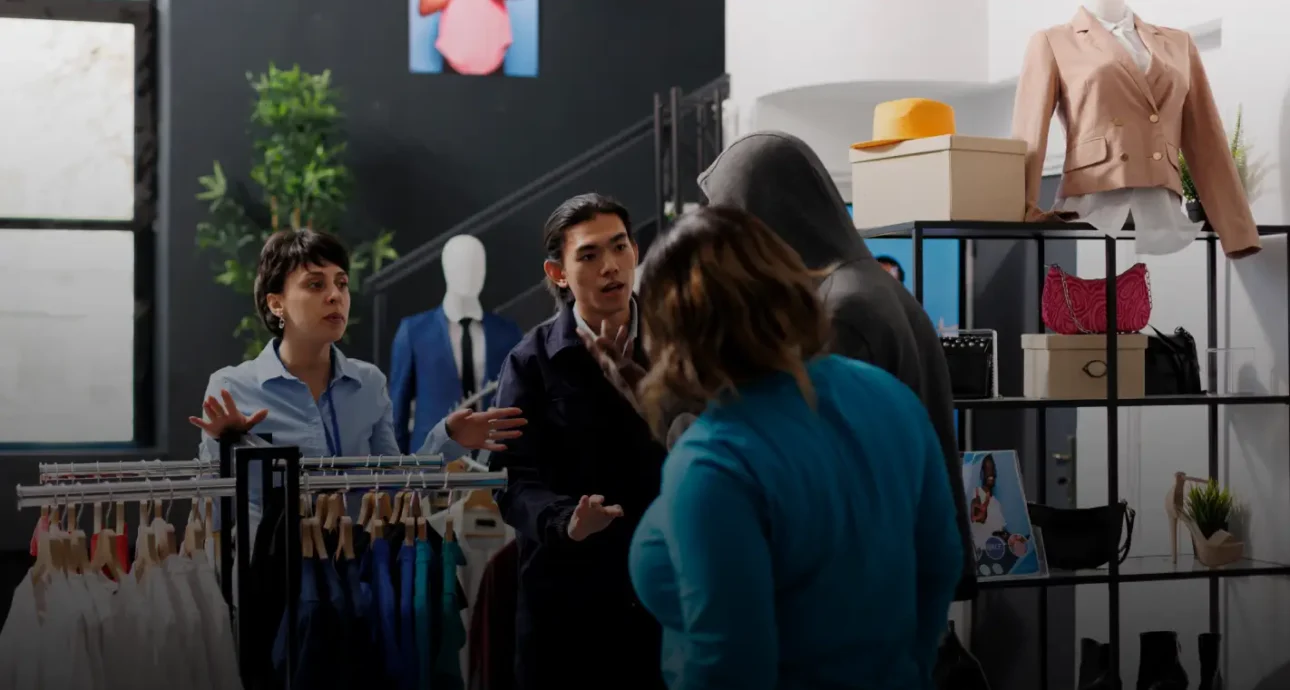
Retail theft allegations in North Carolina often begin with a store report rather than an immediate police arrest. Many people assume that once a store documents suspected shoplifting, the legal outcome is already decided but that is not how the process actually works.
In reality, the path from a store’s internal report to formal criminal charges involves multiple layers of legal review. This process is shaped by statutory definitions, evidence evaluation, and prosecutorial discretion, not by store policy alone.
Understanding how shoplifting laws in North Carolina are applied helps explain why early assumptions about charges are often unreliable.
Instead of drawing immediate conclusions, investigators focus on documentation, legal standards, and whether probable cause exists.
Under N.C.G.S. § 14-72.1, willfully concealing merchandise without paying for it may be unlawful but whether a charge is filed depends on how the facts align with the statute.
If you are dealing with a shoplifting accusation and want clarity rather than assumptions, speaking with Martine Law can help you understand how this process may apply to your case.
This guide from our North Carolina Criminal Defense Attorneys explains how a retail theft report can progress into formal charges in North Carolina and what typically happens at each stage.
Why Store Reports Don’t Count as Criminal Charges
Loss prevention teams and store employees are usually the first to notice conduct they believe may involve theft. Their role is to protect store property and document what they observe, not to determine whether a crime has legally occurred under North Carolina law.
A store report typically includes a written narrative, the time and location of the incident, descriptions of the merchandise, estimated values, and any available surveillance footage.
These records are created for internal tracking and loss prevention purposes, not to establish criminal liability.
When law enforcement becomes involved, officers must independently assess whether the reported conduct meets the statutory elements of a criminal offense.
This legal review is what determines whether a case can move forward. As a result, many store reports never become criminal charges, and others change in scope once legal standards are applied.
How Law Enforcement Reviews Retail Theft Reports
When police receive a retail theft report, their role is to evaluate whether the facts described support further legal action. This process involves more than simply reading a store’s written account.
Officers may review full surveillance recordings rather than short clips, compare transaction logs with alleged unpaid items, and assess whether witness statements are consistent.
They also consider whether the person involved can be reliably identified and whether the documentation supports the store’s claims.
The goal at this stage is not to determine guilt. Instead, the question is whether the reported conduct satisfies the legal definition of an offense and whether the case meets the threshold for probable cause.
How Does Probable Cause Affect Whether Charges Are Filed?
Probable cause is a legal standard that must be met before criminal charges can be initiated. It requires specific, articulable facts showing that a crime likely occurred and that a particular person was involved.
Under N.C.G.S. § 15A-301, a warrant may be issued upon a finding of probable cause based on essential facts supporting the offense.
In retail theft investigations, probable cause is often based on a combination of video footage, employee statements, merchandise documentation, and value records. Each piece of information contributes to whether the legal threshold is met.
This standard is lower than what is required to convict someone at trial, but it is not automatic. If evidence is unclear, incomplete, or inconsistent, officers may delay action until additional information is gathered.
How Are Retail Theft Charges Classified Under North Carolina Law?
Not all retail theft allegations are treated the same way. Classification depends on statutory definitions and factual details, especially the value of the merchandise involved.
Under N.C.G.S. § 14-72, larceny is classified based on value and circumstances, which may affect whether an offense is charged as a misdemeanor or a felony.
This is why documentation of value is a central part of many investigations. Prosecutors and officers often rely on price tags, inventory systems, and store records to determine how an offense should be categorized.
Even small differences in valuation can affect how a case is charged, which is why early assumptions about severity are often unreliable.
How Retail Theft Appears in North Carolina Crime Reporting
According to the North Carolina State Bureau of Investigation (NCSBI) 2024 Crime in North Carolina Annual Summary, shoplifting and other larceny-related offenses account for a substantial portion of reported property crimes statewide.

Based on the North Carolina State Bureau of Investigation’s 2024 reporting, shoplifting accounted for approximately 40,344 reported incidents, while other larceny offenses totaled 54,696 reports. Motor vehicle theft followed with 36,375 reported incidents, motor vehicle parts theft with 6,613, and bicycle theft with 2,493.
These figures represent reported incidents, not charges or convictions. They help explain why many retail theft matters begin as internal store documentation rather than immediate court filings, with legal review occurring later in the process.
How Do Prosecutors Review Retail Theft Cases Before Court?
After law enforcement completes its initial review, the case may be forwarded to a prosecutor for further evaluation.
Prosecutors do not simply rely on the conclusions of a store or a police officer. Their role is to determine whether the evidence satisfies legal standards and whether formal charges should be filed in court.
This review typically includes examining whether the alleged conduct fits within the statutory definitions of theft or concealment, whether the evidence is legally admissible, and whether the documentation supports the proposed charge.
If gaps exist, prosecutors may request additional information or clarification before moving forward.
Because this review occurs after a store report is made, charging decisions often reflect a more deliberate analysis rather than the initial impressions formed at the time of the incident.
Why Does Evidence Quality Matter in Retail Theft Investigations?
Retail theft cases often depend on documentation rather than physical evidence alone. Surveillance footage, transaction logs, inventory records, and written statements all play an important role.
For example, video clarity can affect whether a person can be reliably identified. Time stamps may be needed to connect a person’s actions to a specific transaction. Inconsistent or incomplete records can raise questions about what actually occurred.
When evidence is fragmented or unclear, investigators may delay charging decisions until those issues are resolved. This is one reason why some cases move forward quickly while others remain under review for longer periods.
What Happens After Retail Theft Charges Are Filed?
Once a charging document is filed, the case formally enters the court system. At this stage, the focus shifts from investigation to procedure.
Court dates are scheduled, and the parties begin preparing for the next phases of the case. This may involve reviewing evidence, filing motions, or addressing procedural questions.
The court’s role is not to determine guilt at this point but to ensure that the legal process is followed.
The North Carolina Judicial Branch explains how criminal cases move through the court system.
Why Do Timelines Vary Between a Store Report and a Court?
There is no fixed timeline for how quickly a retail theft case moves from a store report to a courtroom. Some cases are resolved quickly, while others take weeks or months.
Delays may occur when stores need time to gather documentation, when law enforcement must review extensive footage, or when prosecutors request additional information. Identity and valuation issues can also extend timelines.
This variability explains why two similar incidents may follow very different paths through the system.
A Clearer View of the Retail Theft Investigation Process
Retail theft investigations in North Carolina typically follow these steps:
- Store documentation of suspected conduct.
- Law enforcement review for probable cause.
- Evidence and valuation assessment.
- Prosecutorial review under statutory standards.
- Filing of formal charging documents.
- Court-based case progression.
Each stage reflects a structured legal process rather than a predetermined outcome.
Where Legal Counsel Fits Into This Process
Retail theft cases often change after the initial report is made. New evidence may surface, values may be reclassified, or charging decisions may shift based on how the facts are reviewed. These developments typically happen before a case ever reaches a courtroom.
At Martine Law, we help individuals understand how these changes can affect their case, including how early reports are interpreted, how charges are classified, and what procedural steps usually follow
For many people, this stage is less about arguing guilt and more about understanding what the process is likely to look like moving forward.
If you want clarity about what may come next in your situation, you can schedule a confidential call with our team to discuss your options.
Frequently Asked Questions About Retail Theft Investigations in North Carolina
How does a retail theft investigation usually begin in North Carolina?
Most retail theft investigations begin with internal store documentation rather than immediate police action. Loss prevention staff typically record what they observe, preserve video footage, and note item values. Law enforcement later reviews this material to determine whether the reported conduct meets statutory requirements for a criminal offense.
Does a store report automatically lead to criminal charges?
No. A store report is not a legal determination. Law enforcement must independently evaluate whether the documented conduct satisfies the elements of an offense under North Carolina law. If probable cause cannot be established, charges may not be filed, even if a store reports suspected theft.
What role does probable cause play in retail theft cases?
Probable cause is the legal standard required before charges can be filed. It means there must be specific facts suggesting that a crime likely occurred and that a particular person was involved. Without probable cause, law enforcement cannot legally initiate a criminal case.
Why can retail theft charges change after an investigation begins?
Charges may change when additional evidence is reviewed, valuation is clarified, or legal standards are applied more carefully. Early assumptions made during store documentation or initial police review may not reflect how the case is ultimately classified under North Carolina statutes.
How long does it usually take for a retail theft case to reach court?
There is no fixed timeline. Some cases move quickly, while others take weeks or longer. Delays may occur due to evidence review, identity verification, valuation questions, or prosecutorial review. Each case follows its own pace depending on the complexity of the documentation and legal analysis.
Why might someone consult an attorney for a shoplifting charge early in the process?
An attorney can explain how statutory definitions, evidentiary standards, and procedural rules apply to a specific situation. Early legal clarification helps individuals understand how store reports, police review, and prosecutorial decisions may affect what happens next in their case.
