
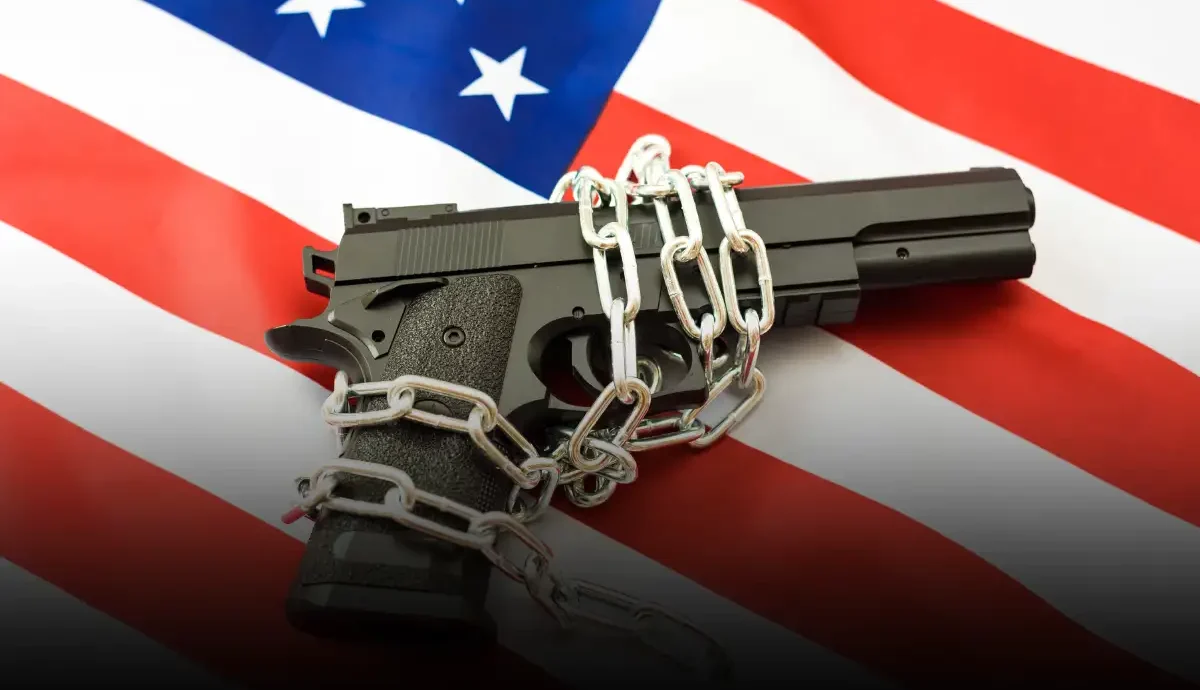
A domestic violence arrest in North Carolina can raise immediate questions about firearm rights and federal restrictions. The Lautenberg Amendment is a federal law that prohibits certain individuals convicted of misdemeanor crimes of domestic violence from possessing firearms. However, an arrest alone does not automatically trigger a permanent federal prohibition. The legal outcome depends on how the case is charged, resolved, and classified under both North Carolina and federal definitions.
In practical terms, courts look at whether there is a qualifying conviction, whether the relationship between the parties meets statutory definitions, and whether the offense includes the required element of force. Protective orders may also create temporary firearm restrictions separate from criminal convictions. Understanding these distinctions helps clarify when a federal gun ban DV arrest becomes a long-term issue and when it does not.
Because state charges interact with federal law, individuals facing allegations often need clarity on how these rules overlap.
North Carolina Criminal Defense Attorneys at Martine Law provide guidance on how state domestic violence charges are reviewed and how federal firearm laws may apply in specific situations.
Key Takeaways
- A domestic violence arrest alone does not automatically create a permanent federal firearm ban.
- A qualifying misdemeanor conviction involving force and a domestic relationship can trigger federal restrictions.
- Protective orders in North Carolina may impose temporary firearm surrender requirements.
- Lautenberg Amendment DV NC cases depend on how the offense is defined and resolved in court.
A Domestic Violence Conviction Can Trigger A Federal Firearm Ban
A conviction for certain domestic violence offenses can result in a federal prohibition on firearm possession under the Lautenberg Amendment. Federal law makes it unlawful for individuals convicted of a qualifying misdemeanor crime of domestic violence to possess firearms. In North Carolina cases, the central question is whether the state conviction satisfies the federal definition.
For the federal prohibition to apply, two elements must be established. First, the offense must include the use or attempted use of physical force or the threatened use of a deadly weapon. Second, the offense must have been committed against a person who qualifies under federal domestic relationship standards. Both elements must be present. If either the force requirement or the qualifying relationship is absent, the federal firearm restriction may not apply.
Under North Carolina law, domestic violence is not a separate criminal offense. Instead, it is typically charged through underlying crimes such as simple assault, assault on a female, assault by pointing a gun, or communicating threats. Courts focus on the statutory elements of the conviction rather than how the charge is labeled in court documents when determining whether federal firearm prohibitions are triggered.
Certain domestic relationships qualify under federal law
Not every relationship qualifies for purposes of the federal firearm prohibition. Federal law recognizes current or former spouses, individuals who share a child, cohabitants or former cohabitants in an intimate relationship, and certain dating partners. The relationship between the parties must fall within these defined categories.
North Carolina domestic violence definitions used in protective order cases appear in N.C. Gen. Stat. § 50B-1 and although state statutes guide charging decisions, federal courts determine whether the relationship meets the federal standard for a misdemeanor crime of domestic violence, meaning that if the conviction does not involve a qualifying domestic relationship, the federal firearm prohibition generally does not apply even if the offense involved force.
An arrest alone does not create a permanent federal ban
A domestic violence arrest by itself does not automatically trigger a lifetime firearm prohibition. The analysis in Lautenberg Amendment DV NC situations focuses on conviction status. A permanent federal ban applies only after a qualifying misdemeanor conviction that meets federal force and relationship requirements.
Temporary firearm restrictions may arise before a conviction. For example, a North Carolina court may impose bond conditions limiting firearm possession while charges are pending. In addition, a civil protective order under Chapter 50B may require temporary surrender of firearms.
The distinction between arrest, temporary restriction, and qualifying conviction is central to understanding how and when federal firearm prohibitions apply.
North Carolina Domestic Violence Charges And Convictions
North Carolina does not have a single criminal offense labeled domestic violence. Instead, domestic violence cases are charged as underlying offenses such as assault or related crimes combined with a qualifying personal relationship. Whether a federal gun ban DV arrest becomes permanent depends on how the case is resolved and whether the final conviction satisfies federal standards.
A dismissal, acquittal, or deferred prosecution that does not result in a conviction does not trigger a permanent federal firearm prohibition. In contrast, a guilty plea or verdict for a qualifying misdemeanor involving physical force and a qualifying domestic relationship may activate federal restrictions. The interaction between state conviction language and federal firearm law is central to the analysis in Lautenberg Amendment DV NC cases.
The specific outcome of the case and the elements of the offense determine whether federal firearm disability applies:
Case Outcome in North Carolina | Federal Firearm Prohibition Status | Reasoning |
Arrest only | No permanent federal ban | An arrest alone does not constitute a conviction under federal law. |
Charges dismissed or acquittal | No | Without a conviction, the federal definition of a misdemeanor crime of domestic violence is not satisfied. |
Deferred prosecution (no conviction entered) | No | If the court does not enter a conviction, federal firearm prohibitions generally do not apply. |
Misdemeanor conviction without force element | Usually No | The offense must include physical force or the threatened use of a deadly weapon to qualify. |
Misdemeanor conviction with force and qualifying domestic relationship | Yes | Both the force requirement and qualifying relationship must be present under federal law. |
Felony conviction | Yes, under separate federal statute | Federal law independently prohibits firearm possession for individuals convicted of felonies. |
Active 50B Protective Order | Temporary restriction | Courts may require firearm surrender during the duration of the protective order. |
Because domestic violence in North Carolina is tied to underlying offenses rather than a standalone charge, careful review of the conviction elements and relationship classification is necessary to determine whether federal firearm restrictions apply.
Protective Orders And Temporary Firearm Restrictions
Separate from criminal convictions, civil domestic violence protective orders issued under Chapter 50B can require the temporary surrender of firearms. When a court enters a 50B protective order, a judge may order the defendant to surrender firearms for the duration of the order. This requirement applies regardless of whether a criminal conviction has occurred.
These restrictions differ from the lifetime federal prohibition associated with a qualifying domestic violence conviction. A 50B order creates a temporary court-ordered limitation that remains in effect only while the protective order is active. Once the order expires or is dissolved, firearm rights may be restored unless another legal restriction applies.
According to N.C. Gen. Stat. § 50B-3.1, North Carolina courts have authority to establish procedures for the surrender, storage, and return of firearms in protective order cases. Because protective orders and criminal convictions operate under separate legal frameworks, it is important to distinguish between temporary surrender requirements and permanent federal firearm disability.
Final Case Outcomes Determine Long-Term Firearm Rights
The final resolution of a domestic violence case plays a decisive role in determining whether long-term federal firearm restrictions apply. In Lautenberg Amendment DV NC situations, a qualifying misdemeanor conviction involving physical force and a recognized domestic relationship can result in a lifetime federal prohibition on firearm possession. By contrast, dismissals, acquittals, or outcomes that do not result in a conviction do not create permanent federal disability.
Courts evaluate the conviction based on specific statutory elements rather than general descriptions of the offense. Key considerations include:
- Whether the offense required proof of physical force or the threatened use of a deadly weapon
- Whether the alleged victim met federal domestic relationship criteria
Whether the conviction was later vacated, expunged, or otherwise set aside
Federal courts interpret the term “physical force” through case law, and North Carolina convictions are reviewed element by element. Even small differences in statutory wording can affect whether a conviction qualifies under federal standards.
After reviewing how domestic violence convictions interact with federal firearm prohibitions, some individuals choose to speak with a criminal defense lawyer to better understand how statutory definitions and judgment language may affect their firearm rights.
Federal Firearm Restrictions Can Affect Employment And Licensing
A federal firearm prohibition can extend beyond personal gun ownership and affect professional and licensing opportunities. Individuals subject to federal firearm restrictions may face limitations in careers that require lawful firearm possession, including military service, law enforcement roles, private security work, and certain government positions.
Concealed handgun permits may be denied, suspended, or revoked based on disqualifying convictions. Although state permit laws operate separately from federal firearm prohibitions, the practical effect often overlaps when a qualifying conviction exists.
Because a federal gun ban DV arrest becomes permanent only after a qualifying conviction, case strategy and charge resolution can influence long-term professional consequences. After considering how domestic violence convictions may affect firearm eligibility and employment status, some individuals consult a criminal defense attorney to clarify how North Carolina charges and federal law intersect in their specific circumstances.
Understanding When Firearm Rights Are Affected After A Domestic Violence Case
The Lautenberg Amendment creates a lifetime federal firearm prohibition only when a qualifying misdemeanor domestic violence conviction occurs. An arrest alone does not trigger a permanent ban, although protective orders and bond conditions may impose temporary restrictions. In North Carolina, the specific offense charged, the relationship between the parties, and the wording of the final judgment determine whether federal firearm law applies.
Recognizing the difference between temporary surrender requirements and permanent federal disability helps reduce confusion about legal rights and obligations. For case-specific guidance, North Carolina Criminal Defense Attorneys at Martine Law can explain how state domestic violence charges interact with federal firearm laws. If you would like to review how these rules apply to your circumstances, you may book a free case evaluation by calling +1(704)461-9488 or visit the Contact Us page.
Frequently Asked Questions about Federal Firearm Restrictions in North Carolina DV Cases
Can a misdemeanor plea affect firearm rights even if jail time is not imposed?
Yes. A misdemeanor conviction can trigger firearm restrictions even if the sentence does not include jail. Under Lautenberg Amendment DV NC analysis, the key issue is whether the conviction meets federal criteria for force and domestic relationship, not the severity of punishment. Courts look at the statutory elements of the offense rather than the length of the sentence imposed.
Does a pending domestic violence charge prevent firearm possession?
Generally, a pending charge alone does not create a permanent prohibition. However, bond conditions or a protective order may temporarily restrict firearm possession. A federal gun ban DV arrest only becomes permanent if there is a qualifying conviction under federal law. Individuals should carefully review court orders to determine temporary surrender obligations during the case.
Can an expungement restore federal firearm rights?
Sometimes. Expungement or setting aside a conviction may affect federal eligibility, but federal law applies specific criteria. The conviction must be fully vacated or removed in a manner recognized under federal statute. Simply completing probation does not automatically restore rights. A detailed review of the record is often necessary to determine eligibility.
Are dating relationships included under domestic violence definitions?
Yes, certain dating relationships can qualify. North Carolina statutes define personal relationships broadly for protective orders, and federal law includes current or former intimate partners. Courts evaluate the nature of the relationship at the time of the offense. The classification can determine whether a conviction falls within federal firearm prohibition rules.
